
Concrete Crack Repair for Building and Construction
Concrete is one of the most widely used construction materials in the world, valued for its strength, durability, and versatility. However, even well-constructed concrete structures are not immune to cracking over time. Whether it appears in a residential foundation, a commercial building floor, a driveway, or a retaining wall, a concrete crack is something that deserves proper attention. Understanding why cracks form, how to distinguish between different types, and what repair methods are appropriate for each situation is essential knowledge for anyone involved in building maintenance or construction.
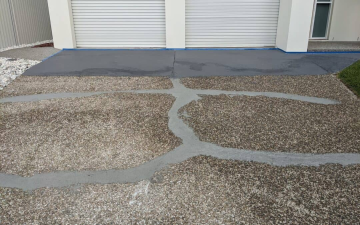
Why Concrete Cracks
Cracking is a natural characteristic of concrete, and in many cases it is an expected outcome of the material's physical properties and the conditions it is exposed to. The most common causes include:
- Shrinkage during curing — as fresh concrete dries and hardens, it loses moisture and contracts slightly. If this shrinkage is restrained by surrounding materials or the subbase, tensile stress develops and cracks can form
- Thermal expansion and contraction — concrete expands in heat and contracts in cold. Without adequate expansion joints to accommodate this movement, stress accumulates and results in cracking over time
- Settlement and ground movement — when the soil beneath a concrete slab shifts, settles unevenly, or becomes saturated, the slab loses uniform support and may crack under its own load
- Overloading — concrete is designed to bear specific load capacities. When those limits are exceeded — by heavy vehicles, equipment, or structural modifications — cracking can occur
- Corrosion of reinforcing steel — in reinforced concrete, moisture and oxygen can reach the embedded steel rebar over time, causing it to rust and expand. This expansion creates internal pressure that eventually fractures the surrounding concrete
- Poor construction practices — inadequate mixing ratios, insufficient curing time, improper placement of control joints, or using too much water in the mix can all contribute to premature or excessive cracking
- Freeze-thaw cycles — in colder climates, water that has penetrated small surface pores freezes and expands, gradually widening existing cracks or creating new ones with each seasonal cycle
Identifying the underlying cause of a crack is a necessary first step before selecting a repair method, as treating the symptom without addressing the source may result in the crack reappearing.
Types of Concrete Cracks and What They Indicate
Not all concrete cracks are equal in terms of severity or implication. A general understanding of crack types helps determine the appropriate level of response:
- Hairline cracks — very fine, shallow cracks that typically occur on the surface during the early stages of curing. They are generally cosmetic in nature and do not affect structural performance, though they can allow moisture entry if left unsealed
- Shrinkage cracks — slightly wider than hairline cracks, these form as the concrete cures and contracts. They are common and usually non-structural, but should be monitored and sealed to prevent water infiltration
- Settlement cracks — these occur when sections of a slab sink or shift relative to each other due to soil movement beneath. They can be either cosmetic or structural depending on their location, width, and the extent of displacement
- Structural cracks — wider, deeper, or actively growing cracks that may indicate stress on load-bearing elements. These are found in foundations, columns, beams, or walls and require professional evaluation before any repair work is carried out
- Horizontal cracks in foundation walls — these can indicate lateral pressure from surrounding soil and are generally considered more serious than vertical cracks in the same location
- Diagonal or stair-step cracks — often seen in block or brick foundations and retaining walls, diagonal cracks typically result from differential settlement and should be assessed by a qualified professional
- Active vs. dormant cracks — an active crack continues to grow or move, while a dormant crack has stabilized. This distinction matters significantly when choosing a repair method, as active cracks require flexible repair solutions
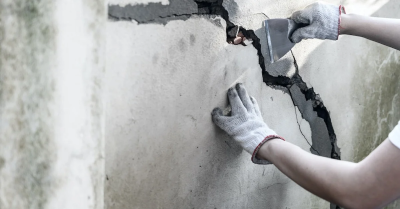
Concrete Crack Repair Methods
The appropriate repair method depends on the type, width, depth, and cause of the crack, as well as whether it is active or dormant. Common professional repair methods include:
- Epoxy injection — a widely used method for repairing structural cracks in concrete. Epoxy is injected into the crack under low pressure, filling the void and bonding the concrete back together once cured. This method is effective for dormant cracks and restores a high degree of structural integrity to the repaired area
- Polyurethane foam injection — particularly effective for cracks where water infiltration is the primary concern. Polyurethane foam expands upon contact with moisture, filling the crack and forming a flexible, waterproof seal. It is commonly used in basement walls and foundations where active water seepage is present
- Routing and sealing — the crack is widened slightly using a grinder or saw to create a uniform channel, which is then filled with an appropriate sealant such as silicone or polyurethane. This method is suitable for non-structural, surface-level cracks and is commonly used on floors, driveways, and flatwork
- Concrete stitching — metal staples or stitching dogs are installed across the crack to hold the two sides together and prevent further movement. This method is often used in combination with other repair techniques for cracks that show signs of widening
- Carbon fiber reinforcement — carbon fiber straps or sheets are bonded to the concrete surface across the crack to provide additional tensile strength and restrict further movement. This approach is commonly used in foundation wall repair where lateral pressure is a contributing factor
- Full-depth slab replacement — in cases where a section of concrete is severely deteriorated, extensively cracked, or structurally compromised beyond the point of effective repair, removing and replacing that section entirely may be the most appropriate course of action
- Surface patching and resurfacing — for shallow, cosmetic cracks and surface deterioration, patching compounds or resurfacing overlays can restore the appearance and provide a degree of surface protection, though they do not address structural issues
Factors That Affect Repair Durability
Carrying out a repair is only part of the equation. The longevity of a concrete crack repair depends on several important factors:
- Surface preparation — the crack and surrounding area must be clean, dry, and free of loose material, dust, and contaminants before any repair product is applied. Poor preparation is one of the most common reasons repairs fail prematurely
- Choosing the right repair material — different repair products have different properties in terms of flexibility, adhesion, compressive strength, and moisture resistance. Selecting a material that matches the demands of the application is essential
- Addressing the root cause — if the underlying cause of cracking — such as poor drainage, soil instability, or structural overloading — is not corrected, new cracks are likely to form even after the existing ones are repaired
- Environmental conditions during application — temperature, humidity, and moisture levels at the time of repair can significantly affect how well repair materials cure and bond
- Professional assessment for structural concerns — cracks that affect load-bearing elements should always be evaluated by a structural engineer or qualified professional before repair work begins, to ensure the chosen method is appropriate and safe
Maintaining Concrete Structures Over Time
Concrete, while durable, benefits from periodic inspection and timely maintenance. Addressing small cracks before they widen, ensuring proper drainage around slabs and foundations, applying appropriate sealers to exposed surfaces, and monitoring structures after significant weather events or ground movement are all practical steps that contribute to the long-term performance of concrete in any building or construction context. A proactive and informed approach to concrete maintenance helps preserve structural integrity and extends the useful life of the structure over time.