
Early Detection Saves Vision: Self-Tests & Key Insights for Macular Degeneration (AMD)
Andrew Mitchell
Age-related macular degeneration (AMD) is the leading cause of irreversible vision loss in adults over 50, yet early symptoms often go unnoticed. Catching AMD in its early stages—dry AMD—can slow progression and preserve central vision. Learn how to self-test at home, recognize warning signs, and take proactive steps to protect your eyesight.

What Is Age-Related Macular Degeneration (AMD)?
AMD affects the macula, the small central part of the retina responsible for sharp, detailed vision (e.g., reading, recognizing faces, driving). It occurs when the macula deteriorates over time, leading to blurred or distorted central vision—peripheral vision typically remains intact.There are two main types:
- Dry AMD: The most common form (80-90% of cases), caused by gradual breakdown of retinal cells and buildup of yellow deposits called drusen. It progresses slowly, often with mild symptoms in early stages.
- Wet AMD: A more severe, rapid form where abnormal blood vessels grow under the macula, leaking fluid or blood and damaging tissue. It can cause sudden vision loss if untreated.Risk factors include age (over 50), family history, smoking, obesity, high blood pressure, and prolonged sun exposure. Early detection is critical—regular screenings and self-tests can make a life-changing difference.Keywords: age-related macular degeneration early detection, dry AMD vs wet AMD, doctor-recommended AMD screening
Key Early Symptoms of AMD – Don’t Ignore These Signs
Many people dismiss early AMD symptoms as “normal aging,” but prompt attention can preserve vision. Watch for:
- Blurred or fuzzy central vision (e.g., difficulty reading small print or recognizing faces).
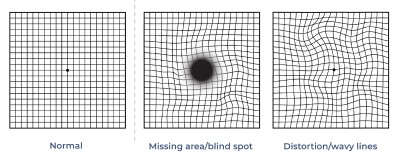
- Distorted vision: Straight lines (like doorframes or grids) appear wavy or bent.
- Dark, empty spots in the center of your field of vision.
- Increased sensitivity to glare or difficulty seeing in low light.
- Diminished color perception (colors appear less vibrant).These symptoms often start in one eye, so it’s easy to compensate with the other—regular self-tests help catch changes early. If you notice any of these, schedule an eye exam immediately.
How to Self-Test for AMD at Home (Simple, Effective Methods)
You don’t need special equipment to check for early AMD—these clinically validated self-tests take minutes and can be done anywhere:
1. The Amsler Grid Test (Gold Standard for Self-Screening)
The Amsler Grid is a simple tool used by eye doctors to detect macular damage. Here’s how to use it:
- Print a standard Amsler Grid (available free online) or use a digital version on a smartphone/tablet.
- Hold the grid 12-15 inches from your face in good lighting.
- Cover one eye with your hand (don’t press on the eye).
- Focus on the black dot in the center of the grid.
- Note if any lines appear wavy, broken, blurred, or missing. Do straight lines curve? Is the grid distorted?
- Repeat with the other eye.A normal result means all lines are straight and clear. Any distortion or missing lines signals a need for urgent eye care—this could indicate early AMD or other retinal issues.
2. Central Vision Acuity Test
- Use a newspaper, book, or smartphone text (12-point font).
- Hold it at a comfortable reading distance (14-16 inches).
- Cover one eye and read aloud—note if text feels blurry, faded, or hard to focus on.
- Compare both eyes: Is one eye noticeably worse than the other?
- If you need to hold text farther away than usual or squint to read, it may be an early AMD sign.
3. Low-Light Vision Test
- Dim the lights in a room (e.g., at dusk or with a lamp turned down).
- Try to read a book or recognize objects across the room.
- AMD often impairs low-light vision—if you struggle more than usual, it’s worth a checkup.
Important Note: Self-tests are not a replacement for professional eye exams. They’re a tool to catch changes early—always follow up with an ophthalmologist for a comprehensive dilated eye exam, which can confirm AMD and assess its stage.Keywords: Amsler Grid AMD self-test, at-home macular degeneration screening, clinical-grade AMD self-assessment
Proactive Steps to Slow AMD Progression
While there’s no cure for AMD, lifestyle changes and targeted interventions can slow progression—especially in early stages:
- Quit smoking: Smoking doubles AMD risk and accelerates vision loss. Talk to your doctor about smoking cessation tools.
- Eat a nutrient-dense diet: Focus on foods rich in antioxidants and omega-3s: leafy greens (spinach, kale), fatty fish (salmon, sardines), nuts (almonds, walnuts), and colorful fruits (blueberries, oranges). These support retinal health.
- Protect eyes from the sun: Wear UV-blocking sunglasses and a wide-brimmed hat—prolonged sun exposure damages retinal cells.
- Manage chronic conditions: Control high blood pressure, diabetes, and cholesterol through medication, diet, and exercise. These conditions worsen AMD.
- Consider doctor-recommended supplements: The AREDS2 study (Age-Related Eye Disease Study) found that a blend of vitamins C, E, zinc, copper, lutein, and zeaxanthin may slow dry AMD progression in high-risk individuals. Always consult an eye doctor before starting supplements—they’re not for everyone.
When to See an Eye Doctor – Don’t Delay
Schedule a comprehensive dilated eye exam if:
- You’re over 50 (annual exams are recommended, even with no symptoms).
- You have a family history of AMD (start screening at 40).
- Self-tests reveal distortion, blurriness, or missing vision.
- You notice any of the early AMD symptoms listed above.Eye doctors use advanced tools (e.g., optical coherence tomography, fluorescein angiography) to diagnose AMD and determine if treatment is needed. For wet AMD, treatments like anti-VEGF injections can stop blood vessel growth and preserve vision—early intervention is key to success.
Final Thoughts
Macular degeneration doesn’t have to mean vision loss—early detection through self-tests and regular eye exams is the first line of defense. By recognizing symptoms, testing at home, and making healthy lifestyle choices, you can protect your central vision and maintain independence as you age. Share this guide with family members over 50—spreading awareness could save someone’s sight.