
Beware! Lower Limb Edema in the Elderly: A ''Minor Problem" or a "Major Hidden Danger"?
Many elderly people find that their calves and ankles easily swell in the afternoon or evening—deep marks are left by the edges of their socks; pressing on the swollen skin leaves a small indentation that takes a while to heal. This is often simply attributed to "getting old and having less agility" and easily dismissed. However, seemingly common edema may actually hide significant health risks, such as heart, kidney, or liver problems, or vascular diseases. If not addressed promptly and intervened early, these underlying conditions may gradually worsen. So, which types of edema require immediate medical attention? And what can be done in daily life to alleviate or prevent this swelling?
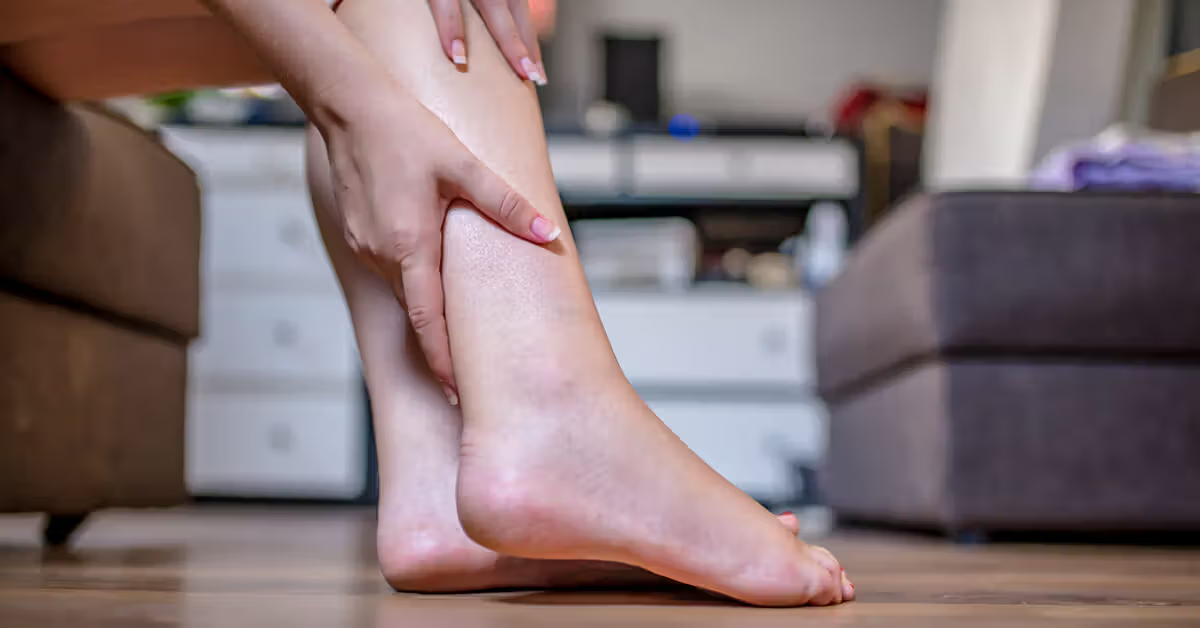
Self-Recognition of Edema
Edema refers to the accumulation of excessive fluid in the interstitial spaces (spaces outside blood vessels), leading to localized or generalized swelling. Due to gravity, the lower limbs of the elderly are more prone to edema. Be cautious if you experience any of the following:
1. Press firmly on the skin of your ankle or the front of your shinbone with your fingers for 5-10 seconds, then release and observe. If the indentation takes several seconds or longer to disappear, this is a typical sign of edema (medically known as "pitting edema").
2. Noticeable marks left by socks; shoes suddenly becoming tight; shiny, taut skin on your legs; noticeable increase in circumference on one or both legs (measure regularly with a soft measuring tape for comparison).
Why does edema particularly affect the elderly?
1. Venous insufficiency/Venous hypertension: Venous insufficiency/venous hypertension is one of the most common causes. With age, venous valve function deteriorates and venous wall elasticity weakens, leading to difficulty in blood returning to the heart (venous hypertension), causing fluid to seep into the tissues. This includes chronic venous insufficiency, varicose veins, and post-thrombotic syndrome of the deep vein thrombosis.
Characteristics: Often bilateral, most pronounced in the calves and ankles, worsening in the afternoon/after prolonged standing, and relieved by elevating the legs or in the morning. May be accompanied by pigmentation, skin changes, and even ulcers.
2. Heart Failure (Cardiac Edema): Edema caused by heart failure (medically termed cardiac edema) is a common cause of edema in the elderly, especially those with a history of heart disease. When the heart's pumping function declines, blood cannot circulate smoothly and tends to pool in the systemic circulatory system (especially the veins in the lower limbs), leading to increased venous pressure. When venous pressure reaches a certain level, fluid leaks into the surrounding tissue spaces, eventually forming edema.
Characteristics: Edema usually starts in the ankles/calves, progressing symmetrically upwards, worsening after exertion, and slightly relieved by rest/elevating the legs. Often accompanied by shortness of breath (especially during activity or lying down), fatigue, and decreased exercise tolerance.
3. Drug Side Effects: Drug side effects are an extremely common and easily overlooked cause of edema. Many medications taken by older adults can cause water and sodium retention. Common medications include: antihypertensive drugs (such as nifedipine and amlodipine), nonsteroidal anti-inflammatory drugs (NSAIDs) (painkillers, such as ibuprofen), and glucocorticoids (such as prednisone, used long-term).
Characteristics: Often appears after medication use, usually as mild bilateral edema.
4. Chronic Kidney Disease (Renal Edema): Decreased kidney function leads to reduced water excretion, resulting in excess water retention.
Characteristics: Often starts in the eyelids and face (more noticeable in the morning), gradually progressing to the whole body (including the lower limbs). May be accompanied by decreased urine output, foamy urine (proteinuria), and fatigue.
5. Idiopathic/Geriatric Edema: Idiopathic edema (also often called senile edema) is quite common in older adults, especially elderly women. This type of edema refers to swelling that persists even after ruling out definite organic diseases such as heart, kidney, and liver diseases. Its occurrence is mainly related to the physiological changes that occur with age in older adults. For example, the skin and subcutaneous tissue become looser, reducing their ability to support body fluids; muscle mass decreases and atrophies, leading to a weakening of the "muscle pump" function (the function of muscles contracting during walking or activity to help blood return), which in turn affects the speed of venous and lymphatic return, making it easier for fluid to accumulate in areas such as the lower limbs, forming edema.
Characteristics: Usually mild, worsens in the afternoon or after activity, and can be relieved by rest/elevation; no other serious systemic symptoms.
6. Malnutrition/Hypoproteinemia Edema caused by malnutrition or hypoproteinemia is common in elderly people who are frail, have chronic diseases, or have poor dietary intake. The causes of this type of edema are mainly twofold: insufficient protein intake and excessive protein loss—for example, long-term consumption due to chronic diseases, kidney or liver disease, or malabsorption, all of which can lead to a decrease in protein in the body. When the level of plasma albumin in the blood decreases, the colloid osmotic pressure of the blood decreases, and water that should remain in the blood vessels easily seeps into the surrounding tissue spaces, ultimately forming edema.
Characteristics: Mostly generalized edema, most pronounced in the lower extremities. Often accompanied by signs of malnutrition such as weight loss, muscle atrophy, dry skin, and fatigue.
7. Liver Disease (Hepatic Edema): In severe liver disease, edema occurs due to various factors such as decreased albumin synthesis in the liver, portal hypertension, and hormone metabolism disorders.
Characteristics: Edema is often accompanied by ascites (abdominal distension), jaundice (yellowing of the skin and eyes), spider angiomas, palmar erythema, and other manifestations of liver disease. Edema may first appear in the lower extremities, but ascites is often the more prominent feature.
8. Deep Vein Thrombosis: Although the overall incidence of deep vein thrombosis is not as high as the previous conditions, it is extremely important and urgent! Thrombi block deep veins, leading to acute venous return obstruction and hypertension.
Characteristics:Usually unilateral (occasionally bilateral), with sudden swelling of the calf and thigh, as the thrombus easily causes local pain. Thrombi have a risk of detachment; early identification and intervention can prevent fatal complications such as pulmonary embolism!
9. Lymphedema While relatively rare, lymphedema, once it occurs, often has a prolonged course and is difficult to manage. The core issue lies in the lymphatic system: when lymphatic vessels become blocked or their function of transporting lymph fluid weakens, the lymph fluid (rich in protein) that should be returning through these vessels cannot circulate properly, gradually accumulating in the interstitial spaces and eventually forming edema.
Characteristics: Edema often starts on the dorsum of the foot and gradually progresses upwards. The skin gradually thickens and hardens, appearing "orange peel" or "elephant skin," and the pitting edema may be subtle or recover slowly. It is mostly unilateral.
When should you seek medical attention?
If you experience sudden swelling in one leg (indicating deep vein thrombosis), accompanied by any of the following symptoms, seek immediate medical attention:
1. Respiratory symptoms: Significant difficulty breathing, inability to lie flat, nighttime awakening due to shortness of breath; Kidney symptoms: Significantly reduced urine output or even anuria;
2. Local symptoms: Redness, increased skin temperature, worsening pain, or ulceration and oozing at the swollen area;
3. Systemic symptoms: Persistent edema of unknown cause, or accompanied by severe fatigue, jaundice, ascites, significant weight loss, or other systemic manifestations.
How to reduce edema in daily life?
1. Medical-grade compression therapy: Under the guidance of a doctor, use medical compression stockings of appropriate compression level, wear them every morning and remove them before bed to promote venous return.
2. Exercises to promote circulation: Engage in moderate walking daily and regularly perform ankle pump exercises (actively flexing, pointing, and rotating the ankle) to strengthen the calf muscle pump function.
3. Dietary Control: Strictly adhere to a low-sodium diet, limiting daily sodium intake to less than 5 grams (approximately the amount in a beer bottle cap). Avoid processed foods such as pickles, ham, and canned goods.
4. Risk Behavior Avoidance: Avoid prolonged standing or sitting (it is recommended to move your lower limbs every 30 minutes); avoid wearing overly tight trousers or socks; use medications that may cause water and sodium retention (such as certain antihypertensive drugs and hormone medications) cautiously under the guidance of a doctor.
Edema is not an inevitable phenomenon of aging, but may be an important health warning signal from the body. Early identification and intervention are key measures to improve the quality of life and maintain health in later years.